


Stop Overthinking It (But Know This First)
Buying your first inflatable paddle board shouldn't require a PhD in marine engineering, but the industry makes it feel that way. Every brand claims their board is the best, every review is five stars, and the spec sheets are full of numbers that don't mean much if you don't know what you're looking at.
Here's the reality: most inflatable SUPs in the $600-$1,200 range are pretty similar. The differences matter, but they're not as dramatic as marketing wants you to believe. This guide cuts through the noise and tells you what actually matters when choosing a board.

Inflatable vs. Hard Board: Why You're Probably Going Inflatable
Hard boards (epoxy, fiberglass) perform better. They're faster, more responsive, and feel more connected to the water. If you live on the water, have storage space, and paddle constantly, hard boards are worth considering.
But for most people, inflatables make way more sense:
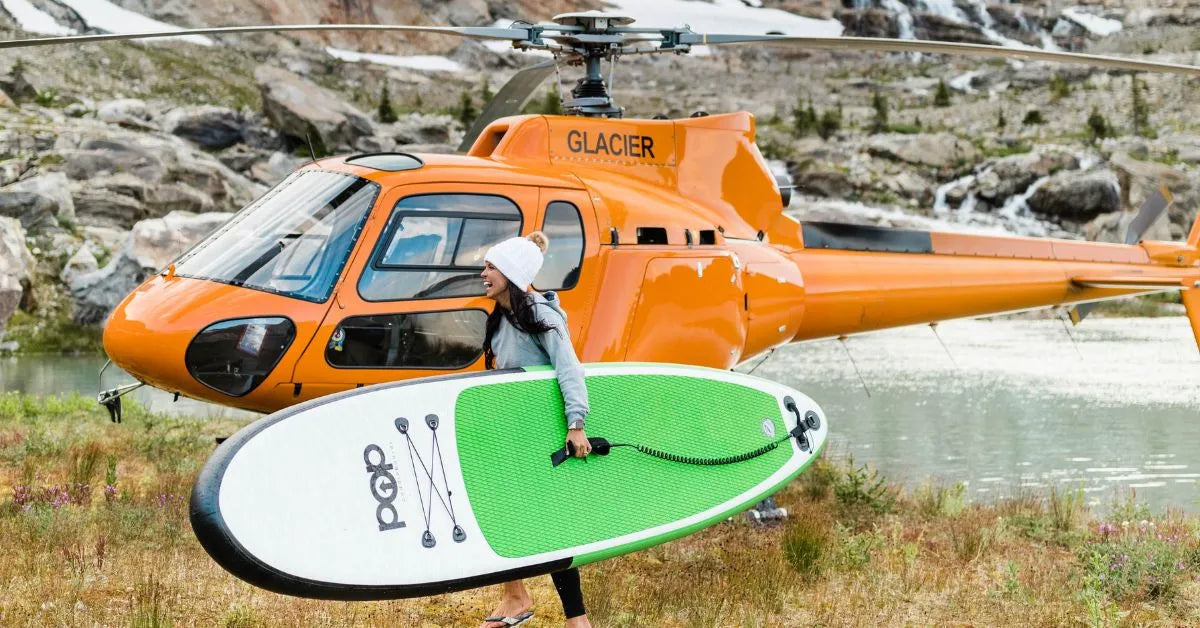
- They pack into a bag that fits in your car, closet, or garage- You can fly with them (try that with a 12-foot hard board)- They're more durable - rocks and docks that would ding a hard board bounce off inflatables- They're cheaper for comparable quality- They're easier to transport (no roof rack needed)- They're safer for beginners (softer surface when you fall)
The performance gap has closed significantly. Modern inflatable construction is rigid enough for everything except high-level racing and serious surf. Unless you're competing or surfing overhead waves, you won't miss the hard board.
Size Matters: Length, Width, and Volume
This is where most people get confused. Here's what the numbers actually mean.
Length
Short boards (under 10'): More maneuverable, easier to turn, better for surfing and kids. The 9'6 Saltwater Beaver is built for surf - short, responsive, designed for waves.
Medium boards (10'-11'): All-around sweet spot. Good for most people, most conditions. Balanced between speed and maneuverability.
Long boards (11'6"+): Faster in a straight line, better for distance and touring. The 11'6 El Capitan Bomber is built for stability, fishing, and covering distance.
Longer boards track straighter (go straight easier) but turn slower. Shorter boards turn easier but require more effort to paddle straight.
Width
Narrow (under 30"): Faster, less stable. For experienced paddlers or racing.
Medium (30"-32"): Balanced. Good for most people.
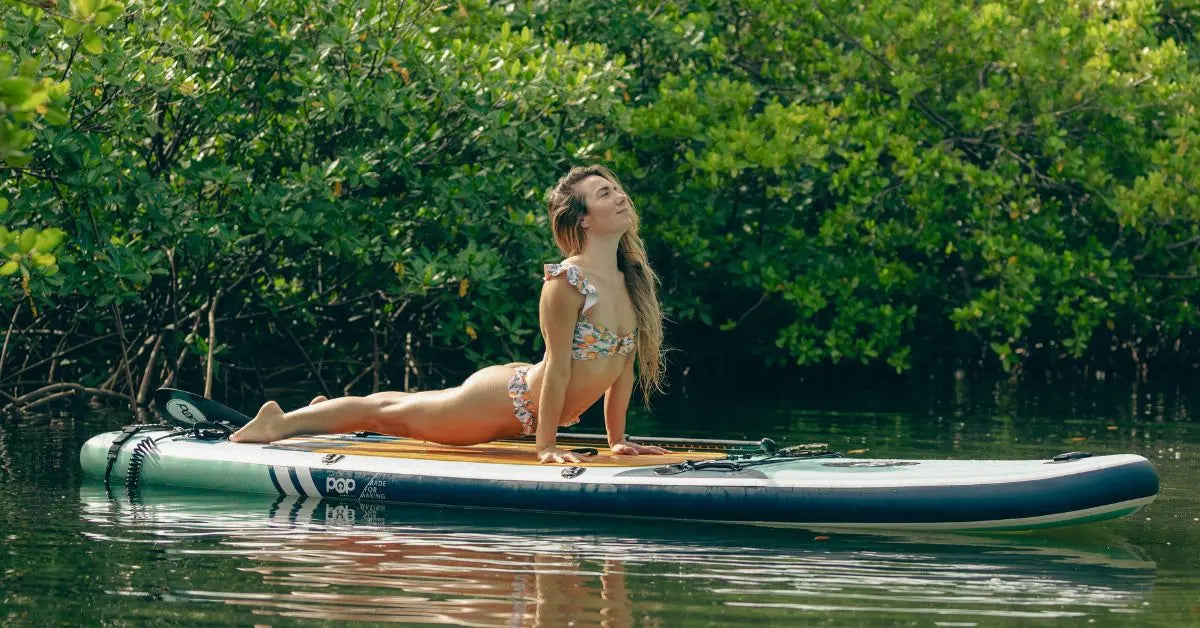
Wide (33"+): More stable, slower. Better for beginners, yoga, fishing, or bringing a dog. The El Capitan at 36" wide is built for maximum stability.
Wider boards are more forgiving but require more effort to paddle. Narrower boards are faster but tippy for beginners.
Volume and Weight Capacity
Volume (measured in liters) determines how much weight the board can support while maintaining performance. Weight capacity is the maximum load.
General rule: Your body weight plus gear should be well under the stated capacity. If you weigh 180 lbs and the board's capacity is 220 lbs, you're maxing it out. It'll float, but it'll ride low and feel sluggish.
Aim for capacity that's 50-100 lbs over your weight plus gear. This gives you performance headroom.
What Size Should You Actually Get?
Beginners, casual paddlers, families: 10'6" to 11' long, 31"-33" wide. Stable enough to learn on, versatile enough to grow into.
Intermediate paddlers, fitness use: 10'6" to 11'6" long, 30"-32" wide. Faster than beginner boards, still stable enough for most conditions.
Touring, distance, fishing: 11'6" to 12'6" long, 32"-36" wide. Tracks well, carries gear, stable for activities.
Surfing: 9' to 10' long, 30"-32" wide. Maneuverable, responsive, designed for waves.
Yoga: 10' to 11' long, 33"-36" wide. Maximum stability for poses.
When in doubt, go slightly bigger and wider. You can always paddle a bigger board. You can't make a small board more stable.
Construction: What Actually Matters
This is where quality separates from junk. Here's what to look for.
Drop-Stitch Construction
All inflatable SUPs use drop-stitch technology - thousands of threads connecting the top and bottom layers. This is what allows them to inflate rigid instead of round like a pool toy.
Quality drop-stitch is tight, uniform, and uses strong threads. Cheap drop-stitch uses fewer threads or lower quality materials. You can't see this from photos - you have to trust the brand or feel the board inflated.
Layers and Material
Single-layer construction: One layer of PVC over the drop-stitch core. Lighter, less durable, cheaper. Fine for occasional use in calm conditions.
Double-layer construction: Two layers of PVC. More durable, stiffer when inflated, heavier. Better for regular use and varied conditions. This is the standard for quality boards.
Fusion construction: Advanced layering that's lighter than double-layer but similarly durable. More expensive. Worth it if you're paddling a lot and want to save weight.
PSI (Inflation Pressure)
Most quality inflatable SUPs inflate to 12-15 PSI. Higher PSI means stiffer, more rigid boards that perform better.
Cheap boards max out at 10 PSI or less. They feel soft and flex when you paddle. Avoid boards that don't specify PSI or max out below 12 PSI.
Seams and Rails
Seams should be heat-welded or glued with reinforcement. Visible, clean seams are good. Messy seams or obvious glue blobs are red flags.
Rails (edges) can be single-layer or double-layer. Double-layer rails are more durable and protect against dings and abrasion.
Deck Pad
The deck pad is where you stand. It should be textured for grip, comfortable underfoot, and cover most of the standing area.
Full-length pads are better than partial pads. Diamond groove or crocodile texture provides good grip. Cheap foam pads compress and lose grip over time.
What's Included: Package Deals vs. Board Only
Most inflatable SUPs come as packages with paddle, pump, leash, and bag. This is convenient but the included accessories are usually basic quality.
Included Paddles
Package paddles are typically aluminum shaft with plastic blades. They work but they're heavy and inefficient. Budget to upgrade the paddle eventually - it makes a bigger difference than you'd think.
Included Pumps
Hand pumps work but pumping to 12-15 PSI is a workout. Dual-action pumps (inflate on both up and down strokes) are faster than single-action.
Electric pumps are worth buying separately if you'll paddle regularly. They save time and effort.
Included Bags
Backpack-style bags are better than basic duffel bags. Wheels are nice if you're carrying the board any distance. Most included bags are adequate but not amazing.
Fins
Most boards include a removable center fin. Some include side fins (thruster setup). The included fins usually work fine - upgrade later if you want better performance.
Price Ranges: What You Get at Each Level
Inflatable SUP pricing breaks down pretty clearly.
Under $400: Proceed With Caution
Amazon basics, big box store brands, unknown manufacturers. Some are okay for kids or very occasional use. Most are junk that won't last a season.
Problems at this price: Low PSI, poor construction, cheap materials, terrible accessories, no customer service or warranty.
$400-$700: Entry Level
Legitimate entry-level boards from known brands. Double-layer construction, 12-15 PSI, decent accessories. Good for beginners who want something that'll last.
You're getting a real board that works. Not the lightest or most advanced, but functional and durable.
$700-$1,200: Sweet Spot
This is where most serious recreational paddlers land. Better construction, lighter weight, improved performance, quality accessories.
Boards in this range handle varied conditions, last for years, and perform well for everything except competitive use.
$1,200-$2,000: Premium
Advanced construction (fusion tech), lighter weight, better performance, premium accessories. Worth it if you paddle frequently and want the best.
Diminishing returns kick in here - you're paying more for incremental improvements. Great boards, but not necessary for most paddlers.
$2,000+: High Performance
Race boards, specialized designs, cutting-edge materials. Unless you're competing or have specific performance needs, you don't need boards at this price.
Brand Reputation and Customer Service
Buy from brands that stand behind their products. Good brands offer:
- Multi-year warranties (2-5 years is standard)- Responsive customer service- Repair support and replacement parts- Clear return policies- Active community and resources
Red flags:- No warranty or very short warranty (under 1 year)- No contact information or customer service- Only available through third-party sellers- No reviews or only fake-looking reviews- Vague or missing specifications
Where to Buy
Local Paddle Shops
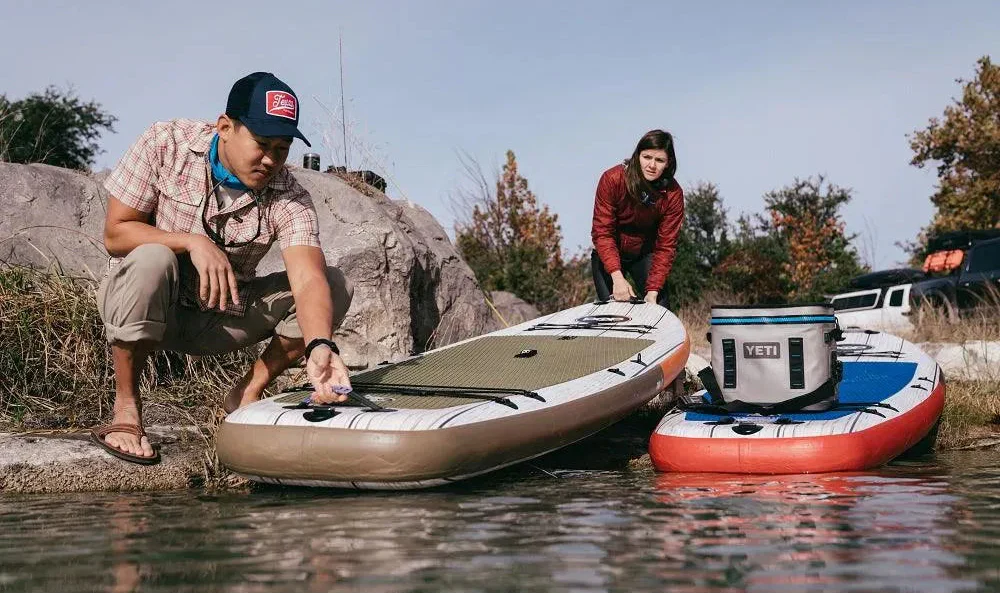
Best option if available. You can see boards in person, get expert advice, try before you buy (some shops offer demos), and support local business.
Prices might be slightly higher than online, but the service and expertise are worth it.
Direct From Manufacturer
Many brands sell direct through their websites. You get full warranty support, sometimes better prices than retailers, and direct access to customer service.
Online Retailers
Convenient, often good prices, but you can't see the board before buying. Stick to reputable retailers with good return policies.
Used Boards
Can be great deals if you know what to look for. Inspect carefully for leaks, seam separation, deck pad wear, and valve damage. Test inflate before buying if possible.
Avoid used boards with visible damage, repairs, or from unknown brands. The savings aren't worth the risk.
What to Actually Test Before Buying
If you can demo or test a board before buying, focus on these things:
Stability
Can you stand comfortably? Does the board feel tippy or stable? Can you move around without feeling like you'll fall?
Stability matters most for beginners, but everyone wants a board that feels secure.
Tracking
Does the board go straight when you paddle, or does it veer off course constantly? Good tracking means less correction and more efficient paddling.
Speed and Glide
How much effort does it take to maintain speed? Does the board glide between strokes or feel sluggish?
Longer, narrower boards generally glide better. Shorter, wider boards require more effort but turn easier.
Maneuverability
How easily does the board turn? Can you pivot it, or does it resist direction changes?
This matters more for surfing and tight spaces. For straight-line paddling, you want less maneuverability (better tracking).
Comfort
Does the deck pad feel good underfoot? Is the board the right size for your height and weight? Can you paddle comfortably for extended periods?

Common Mistakes to Avoid
Buying too small: A board that's too small for your weight will ride low, feel unstable, and perform poorly. When in doubt, size up.
Focusing only on price: The cheapest board is rarely the best value. Spending $600 on a board that lasts five years beats spending $300 on a board that lasts one season.
Ignoring intended use: A surf board won't tour well. A touring board won't surf well. Match the board to what you'll actually do most.
Skipping the warranty: Boards fail. Seams separate, valves leak, materials degrade. A good warranty protects your investment.
Not considering storage and transport: Even inflatable boards take up space. Make sure you have room to store the bag and can transport it to the water.
The Actual Bottom Line
Here's what matters when choosing an inflatable paddle board:
1. Get the right size for your weight and intended use2. Buy quality construction (double-layer, 12-15 PSI minimum)3. Choose a reputable brand with good warranty and support4. Budget for the $700-$1,200 range if you're serious about paddling5. Test before buying if possible, or buy from places with good return policies
Everything else - graphics, color, minor spec differences - matters way less than those five things.
The El Capitan Bomber is a solid example of a well-designed all-around board - stable, versatile, built for real use. The Saltwater Beaver shows what a specialized board looks like - purpose-built for surf with design choices that support that specific use.
Your first board probably won't be your last board. That's fine. Get something versatile that lets you figure out what you actually enjoy, then upgrade or add specialized boards later.
The best board is the one you'll actually use. Don't overthink it. Get something quality in your budget, get on the water, and figure out what you like. You'll learn more from ten hours of paddling than from reading a hundred reviews.
Check out the full inflatable paddle boards collection to see what's available and find the right board for your needs.

Leave a comment
All comments are moderated before being published.
This site is protected by hCaptcha and the hCaptcha Privacy Policy and Terms of Service apply.