


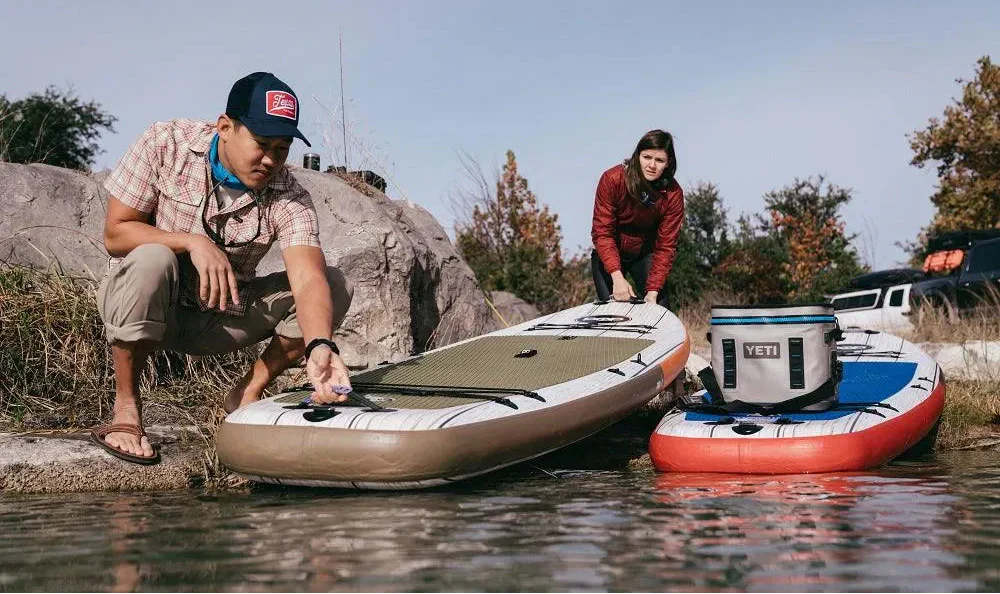
Walk into any paddle shop in the US and you'll see both inflatable and rigid boards. So which one's right for you? Let's cut through the marketing BS and talk about what actually matters.
Storage: Inflatable Wins (No Contest)
This one's obvious but it matters. An inflatable SUP rolls up into a backpack. A rigid board needs 11+ feet of space.
Inflatable reality:
- Fits in a closet, under a bed, in your trunk
- No roof rack needed
- Apartment-friendly (even studio apartments)
- No garage with wall mounts required
Rigid reality:
- Needs dedicated storage space
- Roof rack or truck bed for transport
- Takes up half your garage
- Pain to move around
If you don't have a garage or dedicated storage space, this decision's already made for you.
Durability: Inflatable Surprises People
Here's what most people get wrong: they think inflatable = fragile. Nope.
Quality inflatables like POPboardco's boards use military-grade PVC with drop-stitch construction. They can handle:
- Bouncing off docks
- Scraping over rocks
- Getting tossed around in your car
- Kids jumping on them
- Dogs with claws
Rigid boards? They're typically fiberglass or epoxy. Beautiful, sleek, and... they crack. Drop one on concrete? That's a repair bill. Hit a rock? Hope you brought your repair kit.
Real talk: If you're paddling rivers, rocky shorelines, or anywhere you might hit stuff, inflatable wins. If you're only on calm lakes and treat your board like a baby, rigid works.
Buoyancy and Stability: Inflatable Has More Float
Inflatables can handle more weight. Way more.
A board like the El Capitan has a 420 lb capacity. That's you, your dog, a cooler, and your fishing gear. Try that on most rigid boards.
Why this matters:
- More stable for beginners
- Can bring passengers (kids, dogs, friends)
- Carry more gear for fishing or camping
- Better for yoga (more forgiving platform)
Rigid boards sit lower in the water and have less volume. They're more responsive, but also less forgiving.
Transportation: Inflatable Is a Game-Changer
Getting your board to the water matters more than people think.
Inflatable:
- Throw it in any car (even an Uber)
- Backpack it to remote lakes
- Fly with it (fits in checked luggage)
- Hike to hidden spots
- No roof rack = no wind noise, no gas mileage hit
Rigid:
- Needs roof rack or truck bed
- Can't fly with it easily
- Awkward to carry in wind
- Forget hiking anywhere with it
If you're exploring different lakes across the US—from Minnesota to California to Florida—an inflatable goes anywhere. A rigid board limits where you can go.
Versatility: Inflatable Handles More Abuse
Because inflatables are tougher, you can do more with them.
Things you can do with an inflatable that you'd never try on a rigid:
- River paddling (rocks everywhere)
- Cave exploration
- Cliff jumping (board survives the landing)
- Beach landings on rocky shores
- Letting kids go wild on it
Rigid boards are precious. You baby them. Inflatables? Beat them up. They take it.
Cost: It's Complicated
Inflatables range from $300 (garbage) to $1500+ (quality). Rigids range from $500 (entry-level) to $3000+ (high-end).
What to look for in a quality inflatable:
- Double-layer PVC (single layer = pool toy)
- High stitch count (16,000+ stitches = rigid when inflated)
- Heat-welded seams (not just glued)
- Quality accessories (aluminum paddle, proper pump, durable bag)
POPboardco boards like the Yacht Hopper check all these boxes. Cheap inflatables skip them to hit a lower price point, then you end up with a floppy banana instead of a rigid board.
Repair costs matter too:
- Inflatable puncture: $10 patch kit, 15 minutes
- Rigid crack: $100-$500 professional repair
Speed: Rigid Wins (If You Care)
Let's be honest: rigid boards are faster. About 10-15% faster in racing conditions.
When this matters:
- You're racing competitively
- Every second counts
- You're training for events
When it doesn't matter:
- You're cruising around a lake
- Fishing
- Exploring
- Literally any recreational use
Unless you're competing in SUP races, you won't notice the speed difference. You're not out there timing your laps.
Inflation: The One Real Downside
Yeah, you have to inflate it. Takes about 5-10 minutes with a hand pump.
Solutions:
- Electric pump: 3-4 minutes, zero effort
- Get there early, inflate while you unpack
- It's a warmup (tell yourself that)
Is 5 minutes of pumping worth all the other benefits? For most people, yes. But if you paddle every single day and store your board inflated, rigid might make sense.
Regional Considerations for US Waters
Great Lakes
Rocky shorelines, variable conditions, seasonal use. Inflatable wins—easier to store in winter, handles rocks better.
Coastal (Atlantic, Pacific, Gulf)
Salt water, beaches, travel to different spots. Inflatable's portability and durability make sense. Rigid works if you're local and have storage.
Inland Lakes (Midwest, Mountain States)
Calm water, often remote access. Inflatable's portability is huge for getting to hidden lakes. Rigid works for lake house owners with dedicated storage.
Rivers
Rocks, obstacles, unpredictable conditions. Inflatable, no question. Don't take a rigid board down a river unless you hate money.
The Bottom Line
Get an inflatable if:
- You don't have dedicated storage space
- You want to explore different locations
- You're a beginner or intermediate paddler
- You paddle with kids, dogs, or passengers
- You want something durable and low-maintenance
- You're not racing competitively
Get a rigid if:
- You have garage storage and a roof rack
- You paddle the same spot every time
- You're racing or training seriously
- You want maximum speed and performance
- You're willing to baby your board
- You don't mind the hassle of transport
For 90% of paddlers in the US, an inflatable makes more sense. Boards like the El Capitan or Yacht Hopper give you quality construction, real performance, and the flexibility to paddle anywhere from Florida lakes to California coast to Great Lakes bays.
Rigid boards are great—if your lifestyle supports them. But don't let anyone tell you inflatables are inferior. Modern inflatables are legit. They're just different tools for different situations.
Choose based on how you actually paddle, not what looks cooler in photos.


Leave a comment
All comments are moderated before being published.
This site is protected by hCaptcha and the hCaptcha Privacy Policy and Terms of Service apply.