


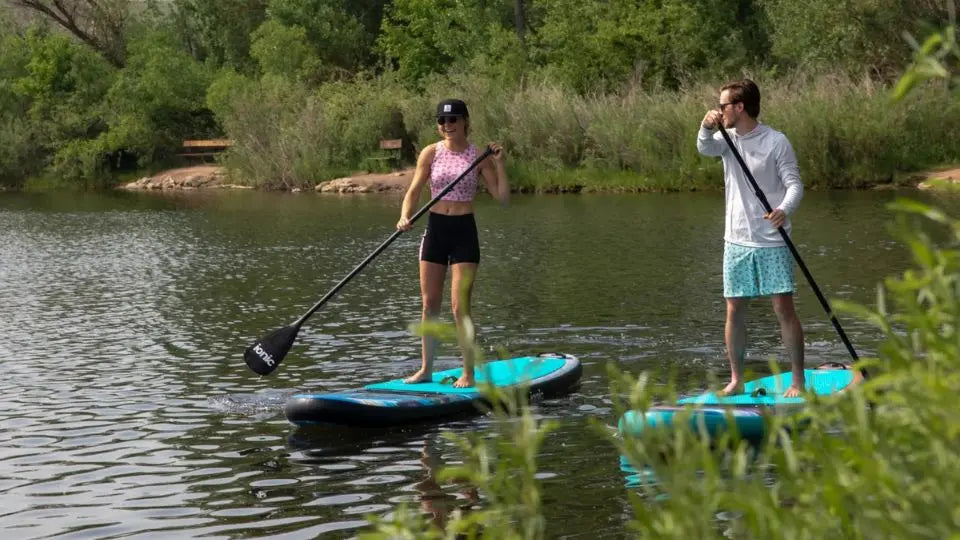
Picking the wrong size paddle board is the most common mistake new paddlers make. Too narrow and you're swimming. Too short and you can't track a straight line. This guide cuts through the noise and tells you exactly what to look for based on how you paddle, where you paddle, and what you weigh.

The Three Dimensions That Actually Matter
Length
Length determines tracking and speed. Longer boards hold a straighter line and cover distance more efficiently. Shorter boards are more maneuverable — better for surf, tight rivers, or paddlers who prioritize turning over speed. For most recreational use, 10'6" to 11'6" is the sweet spot.
Width
Width is the biggest driver of stability. A wider board is more forgiving — better for beginners, yoga, fishing, or anyone bringing gear and passengers. A narrower board is faster and more responsive, but demands more from the paddler. Research confirms it: stability is directly tied to board width relative to rider weight and skill level.
SUP Stability: Board Dimensions, Rider Parameters & Skill Level
This study investigates the rider stability on a stand-up paddle board (SUP) based on board dimensions, rider body parameters, and skill level using a buoyant body dynamics approach. A stability map is developed to visualize stability regions for various system parameters. The result shows that eigenvalue contours are in good agreement with qualitative terms, such as beginner and professional.
Stability of coupled human and stand-up paddle board, BP Mann, 2018
Thickness
Thickness affects volume and buoyancy. Our boards are 6 inches thick — the standard for quality inflatable SUPs. Thicker boards float higher, support more weight, and feel more rigid underfoot. Avoid 4-inch boards if you're over 180 lbs or plan to carry gear.
Weight Capacity: Don't Ignore It
Every board has a rated weight capacity. Don't just check your body weight — factor in your paddle, leash, water, snacks, a dog, a kid, whatever you're actually bringing. Running a board at or near its limit makes it sit low in the water, feel sluggish, and lose stability fast.
Our inflatable paddle board lineup includes boards rated up to 450 lbs — the El Capitan Bomber at 36" wide is our highest-capacity option and one of the most stable boards available at any price point. If you're a bigger paddler, bringing gear, or paddling with a passenger, start there.

Size by Use Case
Beginners
Go wider, not longer. A board in the 10'6"–11'6" range at 32–36" wide gives you the stability to build confidence without fighting the board. The El Capitan at 36" is the most forgiving option in our lineup — stable enough that most beginners are standing and paddling within minutes.
All-around / recreational paddling
The 10'6" Royal Hawaiian and 11'0" PopUp cover most recreational use cases — lakes, calm coastal water, light surf. The Royal Hawaiian's squash tail adds stability and thrust; the PopUp handles up to 15 PSI for a stiffer, more performance-oriented ride.
Fishing
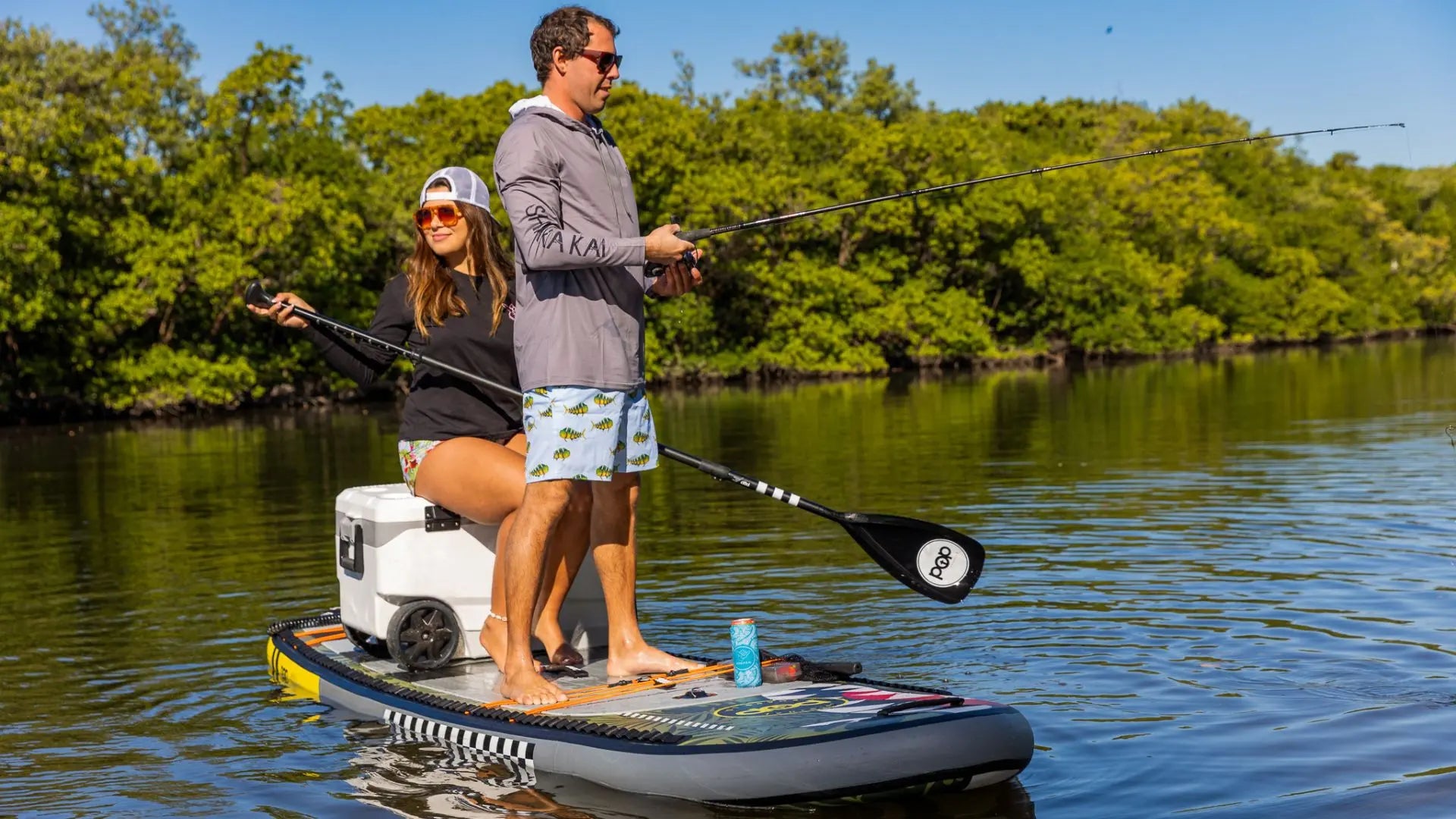
You need stability and deck space. The 11'6" El Capitan has a front and center fishing mount plus extra D-rings for gear. Wide platform, high capacity, stable enough to stand and cast without thinking about your footing.
Adventure / touring / rivers
The 11'0" Yacht Hopper is built for distance — cooler mounts front and rear, extra D-rings for supplies, high volume for stability on moving water. Good for long river days, lake crossings, and coastal exploration.
Yoga and fitness
Wider is better for on-water yoga — more surface area means more stability for balance work. Look for a board at least 32" wide; 34–36" is ideal. The El Capitan's wide deck works well for yoga paddlers who also want a board they can use for general paddling.
Surf / performance
Narrower and shorter. The Royal Hawaiian's squash tail shape handles small surf better than a flat all-around board. If you're chasing performance, prioritize shape and stiffness over width.

Size by Paddler Weight
Use this as a starting point — adjust based on skill level and intended use:
- Under 150 lbs: Most boards in our lineup work well. A 10'6" gives you good maneuverability without sacrificing stability.
- 150–200 lbs: 10'6"–11'0", 32"+ wide. The PopUp and Royal Hawaiian are solid choices.
- 200–250 lbs: 11'0"–11'6", 34"+ wide. The Yacht Hopper or El Capitan depending on use case.
- 250 lbs+: El Capitan Bomber, 36" wide, 450 lb capacity. Don't compromise on width here — stability matters more than anything else at higher weights.
Water Conditions
Flat water (lakes, bays, calm ocean): Most boards perform well here. Prioritize width for stability or length for speed depending on your goals.
Rivers and moving water: Shorter boards are easier to maneuver around obstacles. High-volume boards like the Yacht Hopper handle current better. Avoid narrow race-style shapes.
Small surf / coastal: The Royal Hawaiian's squash tail handles wave energy better than a flat all-around shape. Expect more rocker and a livelier feel.
Choppy or windy conditions: Wider boards are more forgiving. Lower your center of gravity, shorten your stroke, and don't fight the chop — let the board do the work.
Setup and Inflation
Our boards inflate to 12–15 PSI depending on the model — the PopUp goes up to 15 PSI for maximum rigidity. Use an electric SUP pump with auto shut-off to hit your target PSI without guessing. Hand pumps work but take more effort and time. Either way, don't skip checking pressure — an under-inflated board feels soft and unstable, and it's usually the first thing people blame on the board when it's actually a setup issue.
Stability Tips for New Paddlers
- Start on your knees, not your feet — get a feel for the board's movement before standing
- Stand with feet parallel, shoulder-width apart, centered over the handle
- Keep your gaze at the horizon, not at your feet
- A wider board buys you margin — if you're unsure, size up on width
- Wear a leash. Always.
Maintenance and Storage
Rinse after every use, especially in salt water. Dry completely before rolling up — moisture trapped inside causes mold and degrades the material. Store out of direct sunlight; UV is the main cause of PVC degradation over time. Roll, don't fold. A quality inflatable SUP with proper care lasts a decade or more.
Frequently Asked Questions
What size paddle board is best for beginners?
10'6"–11'6" long, 32–36" wide, 6" thick. The wider the board, the more stable it is — prioritize width over length when starting out. The El Capitan at 36" is our most beginner-friendly option.
Does weight capacity matter if I'm under the limit?
Yes — factor in gear, not just your body weight. A board loaded to 90% of its capacity sits noticeably lower and feels less stable. Give yourself room, especially if you're fishing, bringing a dog, or paddling with a child.
What PSI should I inflate my paddle board to?
12–15 PSI depending on the model. The PopUp goes up to 15 PSI for maximum stiffness. Check your specific board's recommended pressure — over-inflating stresses seams, especially in warm weather when air expands.
Is a longer board always faster?
Generally yes, but it's not the only factor. A longer board tracks better and glides more efficiently, but width, fin setup, and paddling technique all affect speed. For recreational paddling, the difference is minimal — prioritize stability and fit over chasing speed.
Can I use one board for multiple activities?
Yes — an all-around board in the 10'6"–11'0" range handles most recreational use cases well. If you have a specific primary use (fishing, yoga, surf), a purpose-built board will outperform a generalist, but a good all-around board is a solid starting point.
Browse the full inflatable paddle board lineup, check out SUP accessories to complete your kit, or explore all water sports gear if you want to go beyond paddleboarding.

Leave a comment
All comments are moderated before being published.
This site is protected by hCaptcha and the hCaptcha Privacy Policy and Terms of Service apply.