Yamaha 2.5 HP Tiller 4-Stroke Outboard Motor

Sale price$1,220

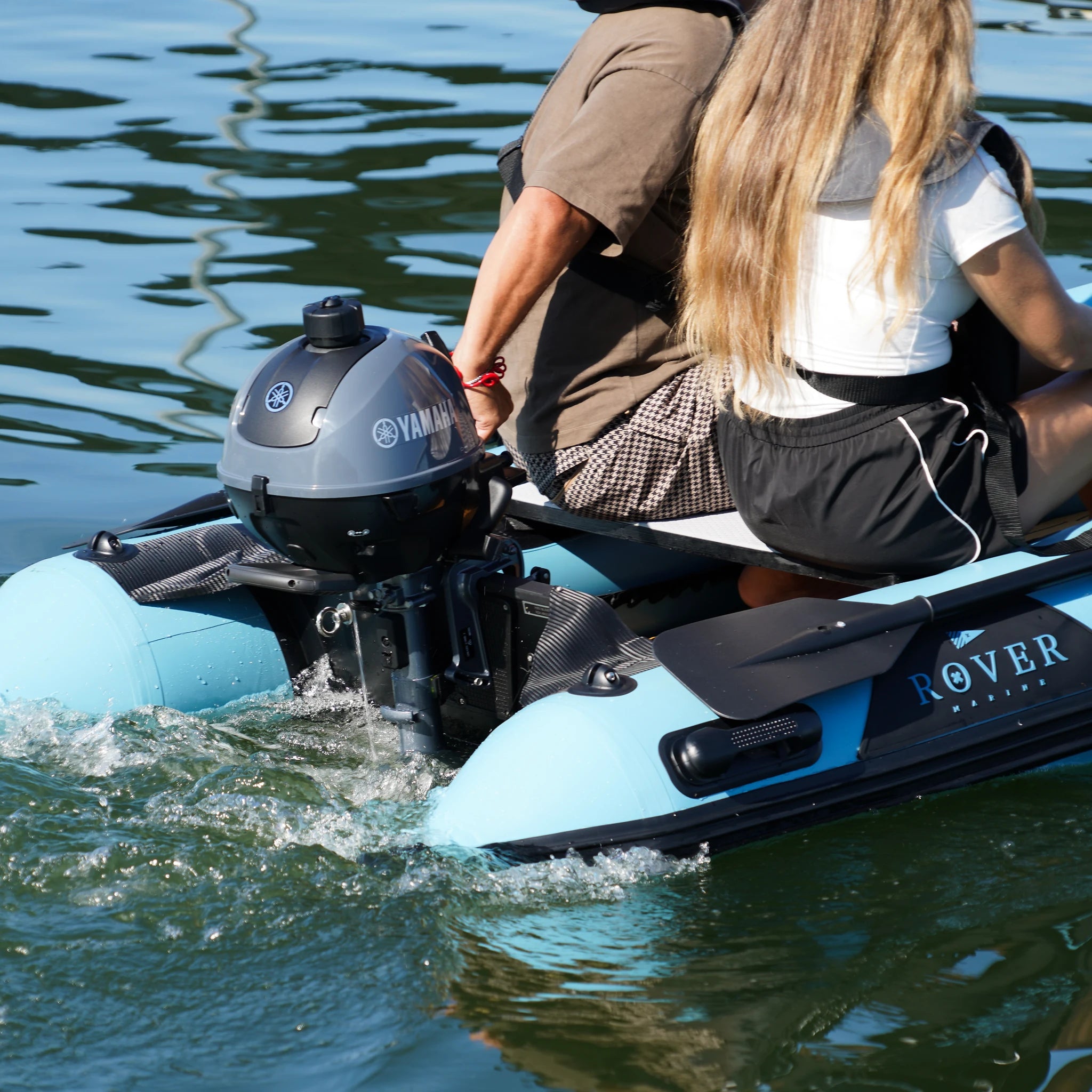
Get dependable, easy-to-manage power for small boats, dinghies, and tenders with the compact Yamaha. This lightweight tiller outboard weighs approximately 37 lb and is designed for convenient transport, mounting, and storage.

Key features

  • Portable design: The approximately 37 lb weight makes this 2.5 HP outboard easier to carry and mount.
  • Comfortable tiller control: 360-degree steering and a dynamically balanced, dampened twist-grip throttle support smooth maneuvering.
  • Built-in fuel tank: The internal tank simplifies setup by avoiding the need for a separate external tank.
  • Easy storage: Yamaha’s Easy Storage Oil Retention System helps prevent oil leaks during on-side storage.

A practical choice when you want portable 4-stroke outboard power without unnecessary bulk.

Outboard motor shaft type: 15" Shaft

Yamaha F2.5 at POP Board Co

Lightest in the lineup. Ready in minutes.

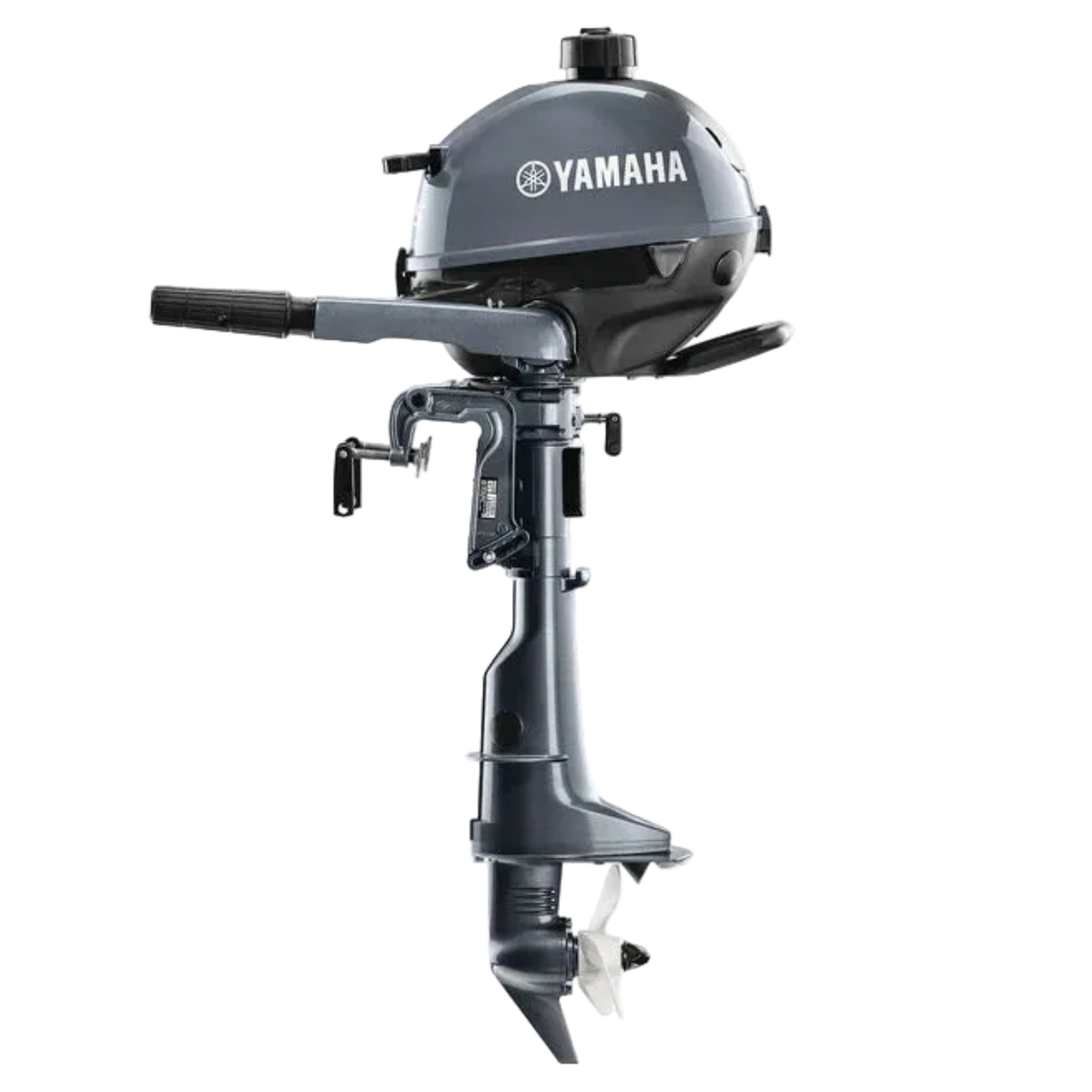
The Yamaha 2.5 HP four-stroke is the lightest motor in Yamaha's portable lineup: a 72 cc single-cylinder that weighs 37 pounds dry in the 15-inch shaft model, with a tiller handle, 360-degree steering, and a built-in fuel tank. It is the motor you carry down the dock yourself and mount without a second pair of hands.

Repowering a tender or small inflatable? Start with the fit checks below. Shopping the boat too? Meet the Rover Marine boats we carry.

For tender trips

Consider the F2.5 for a compatible tender you mount and remove by hand. At 37 pounds with built-in carry handles, it suits boats that live on davits, docks, and beaches.

For fishing plans

Two and a half horsepower sips fuel and keeps the setup feather-light. Match the engine to your boat's rating and usual load, and expect easy cruising rather than quick planing.

For a fresh setup

Compare the motor and the boat together. Your hull, transom, controls, and storage plans all deserve a place in the decision.

Know your Yamaha

Yamaha 2.5 HP specifications.

The F2.5 uses a 72 cc, single-cylinder four-stroke engine with a carburetor. Here are the core engine figures from Yamaha's 2.5 HP specifications.

Rated output
2.5 HP
Displacement
72 cc
Engine layout
Single cylinder, OHV
Fuel induction
Carburetor
Full-throttle range
5,250 to 5,750 rpm
Gear ratio
2.01:1
Dry weight
37 lbs (15-inch shaft model)
Starting
Manual, with decompression

This model comes in 15-inch (F2.5SMHB) and 20-inch (F2.5LMHB) shaft, manual-start tiller versions. Confirm the exact model and supplied equipment before planning installation.

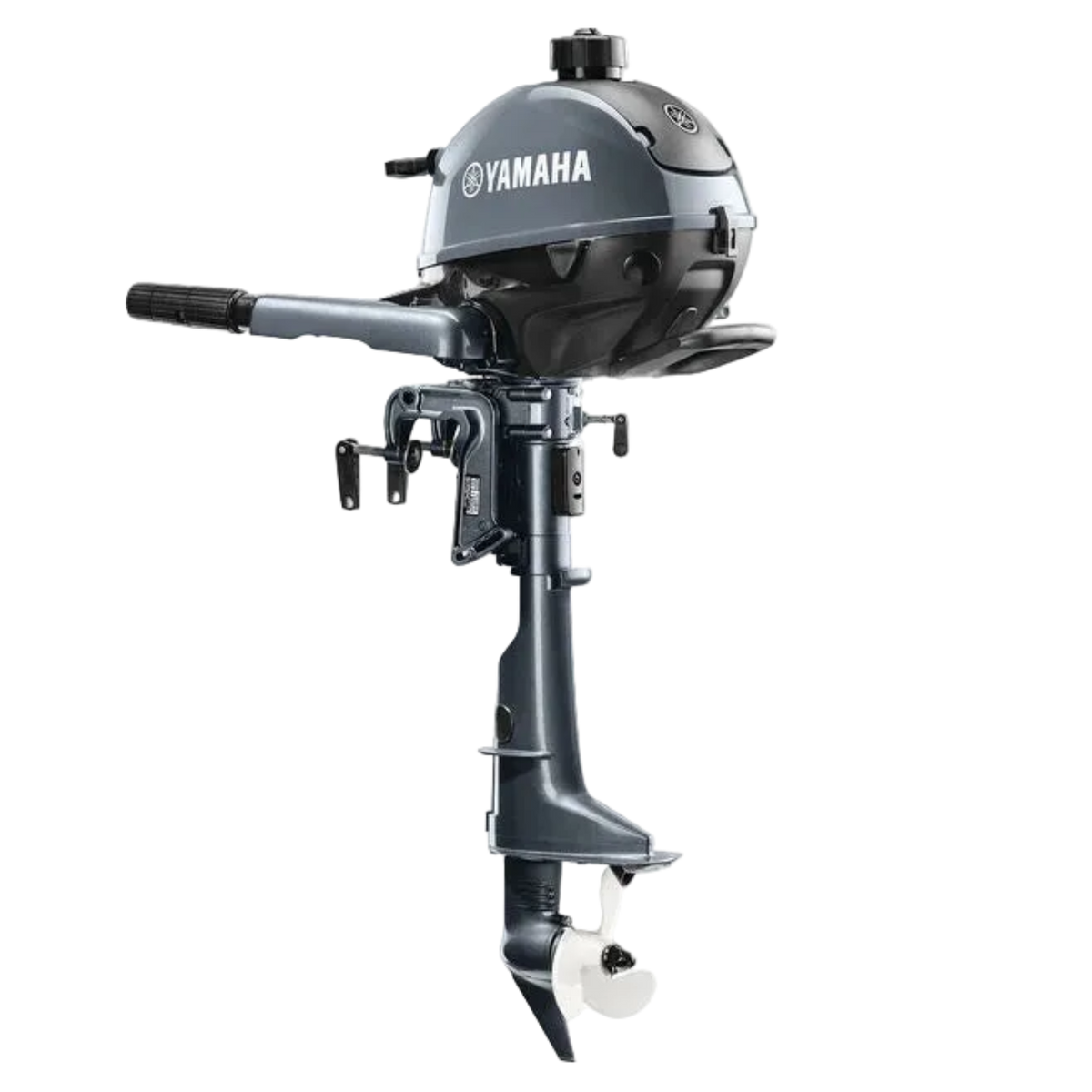
Yamaha 2.5 HP 4-stroke tiller outboard motor.
Yamaha F2.5 reference image. This listing is the manual-start tiller model, available in 15-inch and 20-inch shaft variants.

Thinking beyond the engine?

New motor. New dinghy?

If the boat is part of the upgrade, POP carries Rover Marine Battle Boats and Battle Cats in 8-, 10-, and 12-foot sizes. The Battle Boat is the traditional single-hull dinghy, laid out for tender runs and easy maneuvering. The Battle Cat is the twin-pontoon catamaran, with a wider stance built for stability.

All six list a 15-inch transom. The 8-foot models seat two people and top out at 6 HP; the 10-foot models seat four and top out at 10 HP; the 12-foot models seat four and top out at 20 HP. The 2.5 HP sits under every listed ceiling.

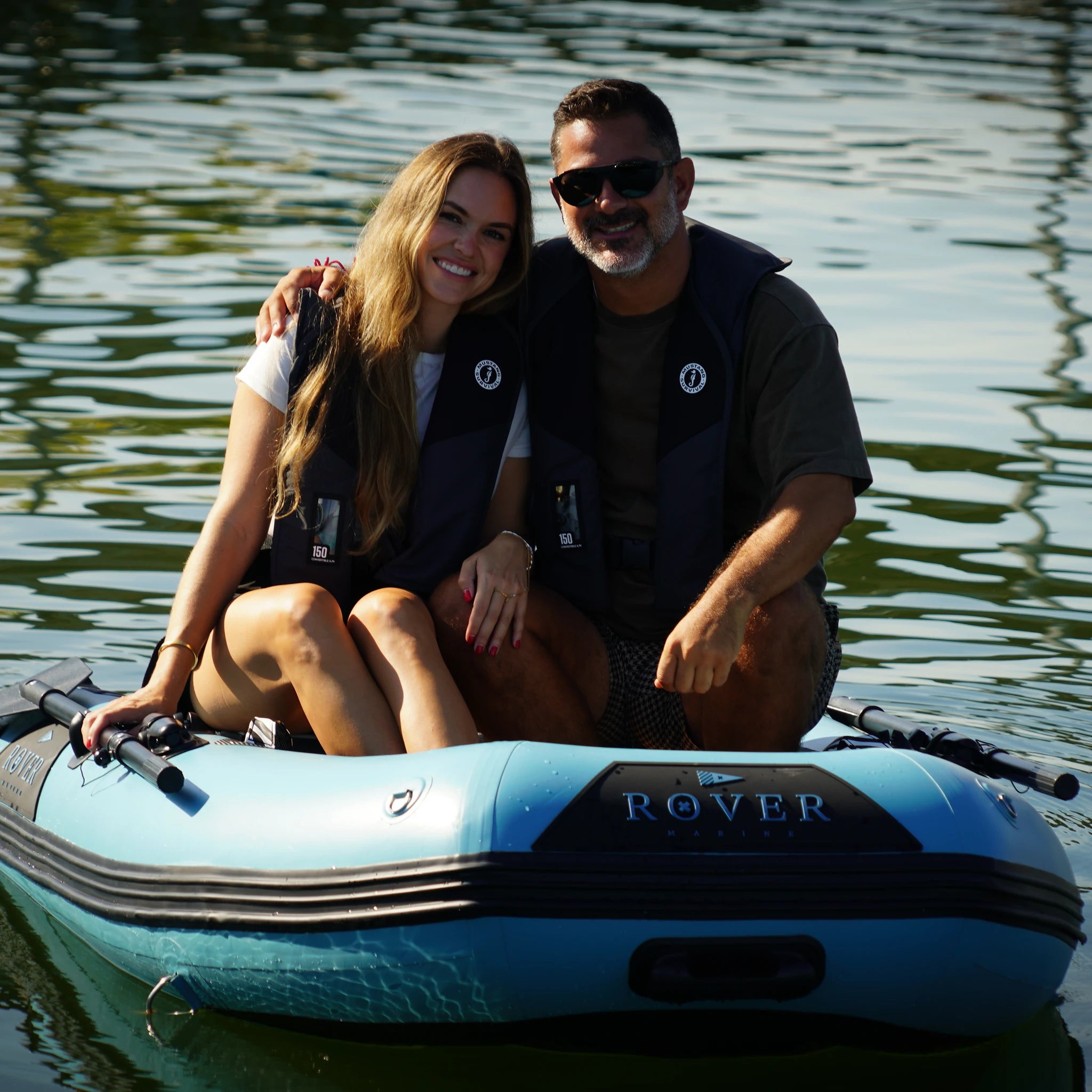
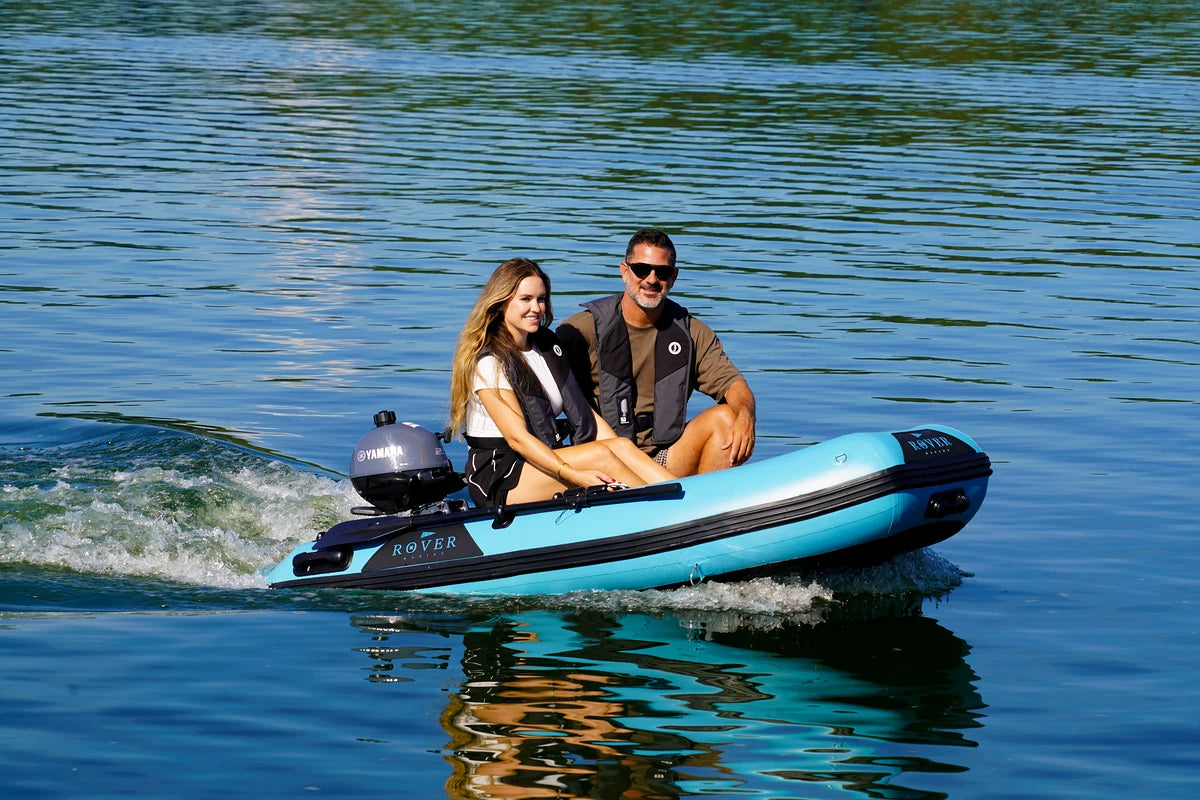
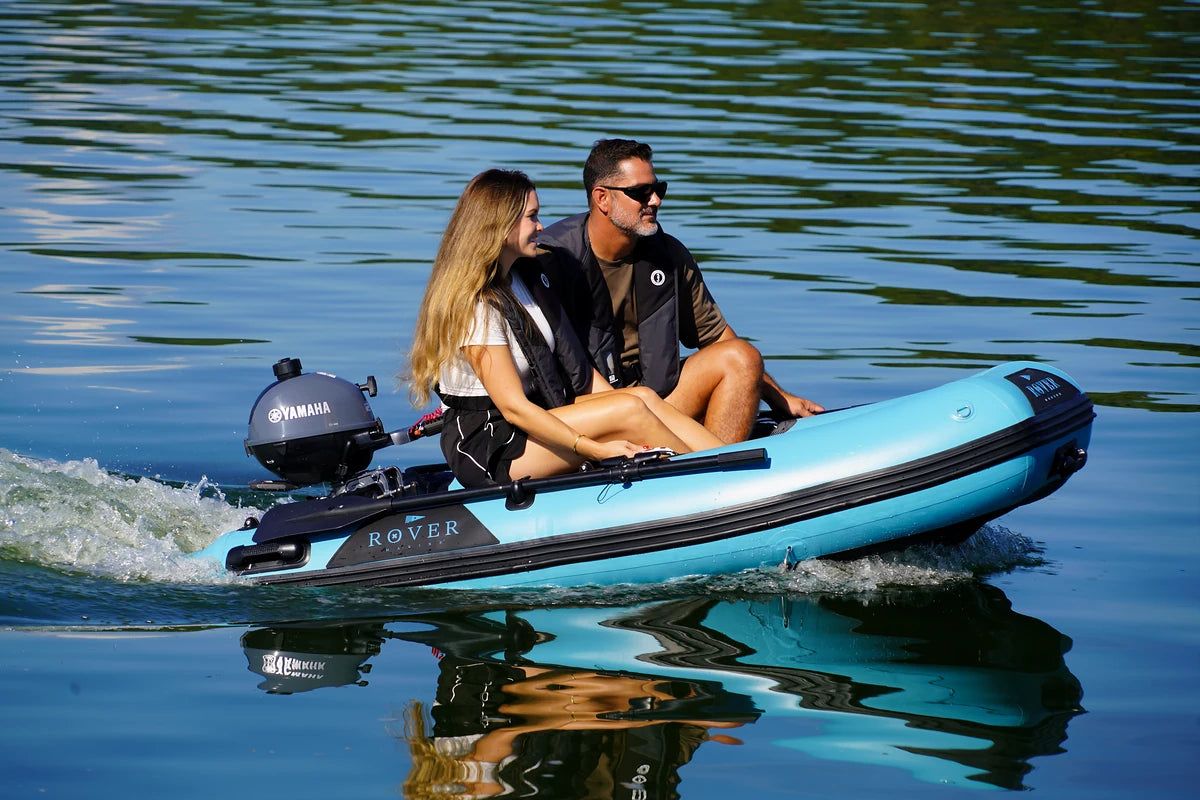
A couple cruising aboard the 8-foot Rover Marine Battle Boat in a harbor.

Traditional dinghy layout

8' Rover Marine Battle Boat

The smallest Battle Boat pairs the classic tender layout with an 86 lb hull and a 600 lb capacity, built for two people and the tightest launch spots.

Footprint
8 ft x 4 ft
Passenger rating
2 people
Maximum power
6 HP
Listed transom
15 inches

The 2.5 HP sits below this model's listed 6 HP ceiling. Confirm shaft length, motor weight, and mounting before pairing.

A solo boater cruising a lake aboard the 8-foot Rover Marine Battle Cat.

Open-bow catamaran layout

8' Rover Marine Battle Cat

The smallest Battle Cat keeps the twin-pontoon stance in an 84 lb package with a 600 lb capacity, for two people who want stability in a compact footprint.

Footprint
8 ft x 4 ft
Passenger rating
2 people
Maximum power
6 HP
Listed transom
15 inches

The 2.5 HP sits below this model's listed 6 HP ceiling. Confirm shaft length, motor weight, and mounting before pairing.

Overhead view of the Rover Marine Battle Boat at a dock, showing bench seats and a teak-style deck.

Traditional dinghy layout

10' Rover Marine Battle Boat

The classic tender shape for ship-to-shore runs, harbor cruising, and family days. Two bench seats and a 1,000 lb capacity, with the deck layout to compare against the dinghy you use now.

Footprint
10 ft x 5 ft
Passenger rating
4 people
Maximum power
10 HP
Listed transom
15 inches

The 2.5 HP sits below this model's listed 10 HP ceiling. Confirm shaft length, motor weight, and mounting before pairing.

A couple aboard a Rover Marine Battle Cat in a harbor.

Open-bow catamaran layout

10' Rover Marine Battle Cat

The twin-pontoon layout and open bow trade a little simplicity for stability: a wider, flatter deck for fishing, swim stops, and moving around with gear aboard.

Footprint
10 ft x 5 ft
Passenger rating
4 people
Maximum power
10 HP
Listed transom
15 inches

The 2.5 HP sits below this model's listed 10 HP ceiling. Confirm shaft length, motor weight, and mounting before pairing.

Four adults aboard a Rover Marine Battle Boat in a marina.

Traditional dinghy layout

12' Rover Marine Battle Boat

More deck, more capacity, more ceiling. The 12-footer carries 1,200 lb and lists a 20 HP maximum, for crews that want room for gear and longer runs.

Footprint
12 ft x 5.5 ft
Passenger rating
4 people
Maximum power
20 HP
Listed transom
15 inches

The 2.5 HP sits below this model's listed 20 HP ceiling. Confirm shaft length, motor weight, total load, and mounting before pairing.
Rover Marine Battle Cat beached on a grassy lake shore with a boater standing behind it.

Open-bow catamaran layout

12' Rover Marine Battle Cat

The largest Battle Cat pairs the twin-pontoon stance with a 1,200 lb capacity and a 20 HP ceiling, for the most deck space and the most headroom on power.

Footprint
12 ft x 5.5 ft
Passenger rating
4 people
Maximum power
20 HP
Listed transom
15 inches

The 2.5 HP sits below this model's listed 20 HP ceiling. Confirm shaft length, motor weight, total load, and mounting before pairing.
Boat photos illustrate Rover layouts, not a tested Yamaha F2.5 package. The linked product pages carry the specifications for each model. Boats and motors are sold separately unless a listing expressly includes both.

See it on the water

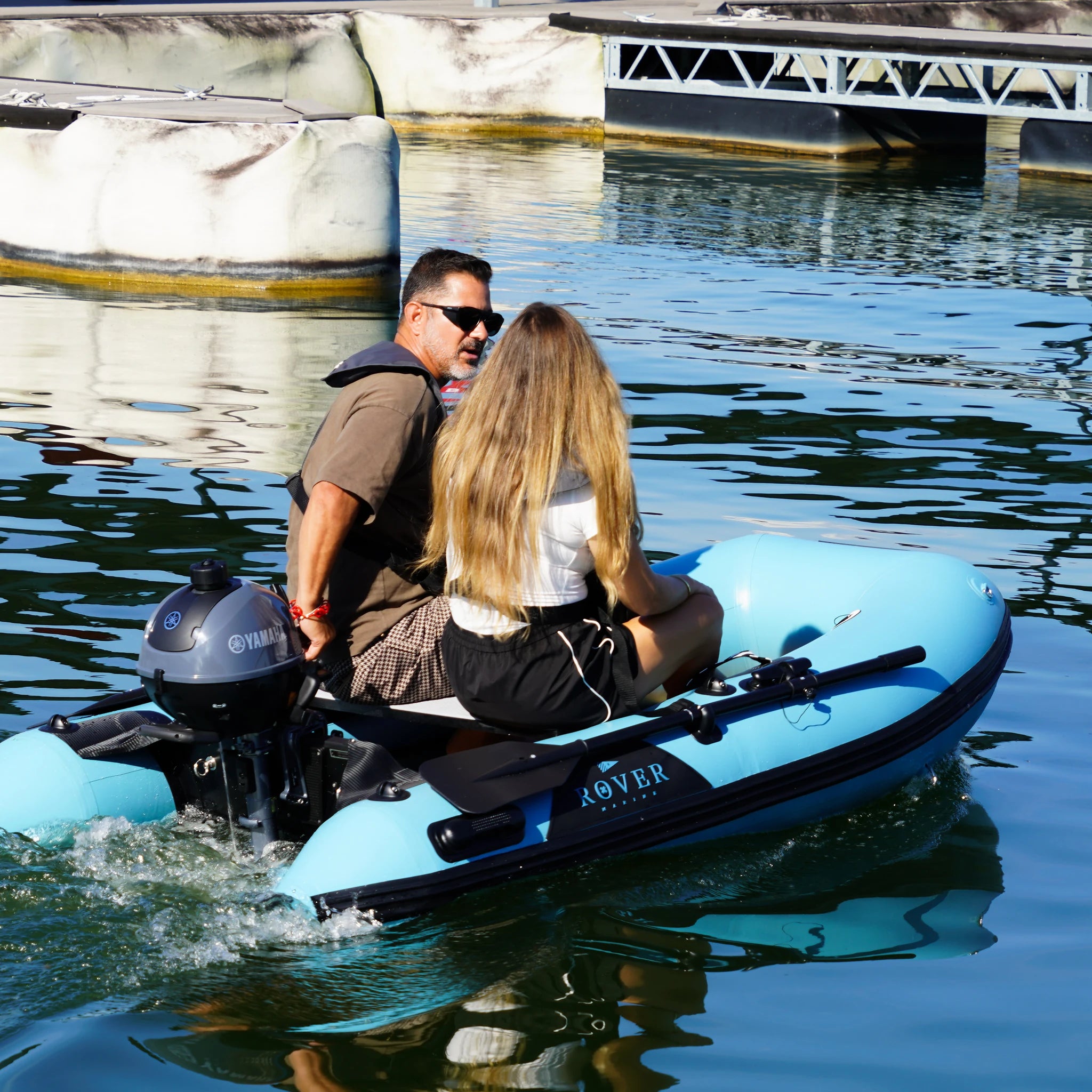
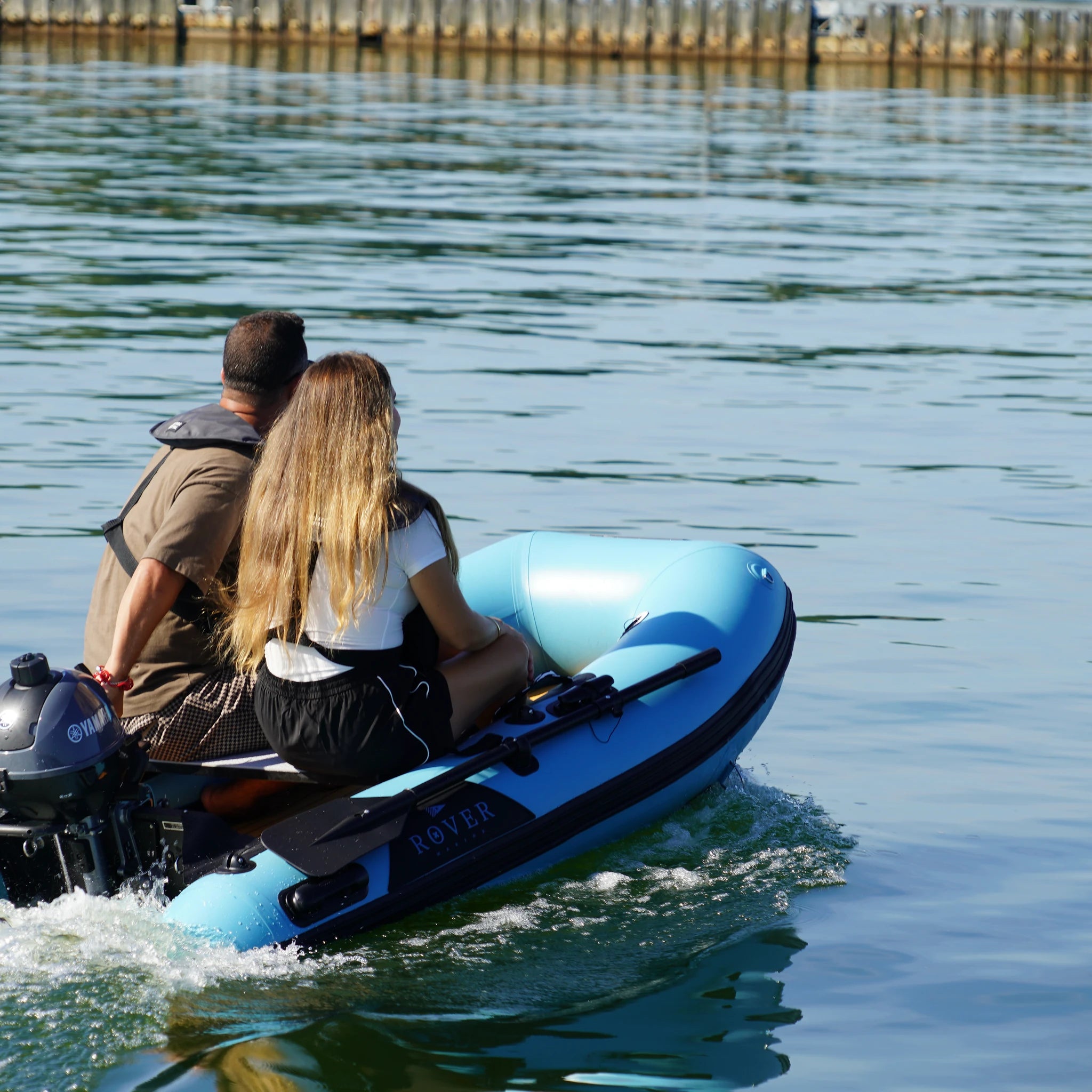
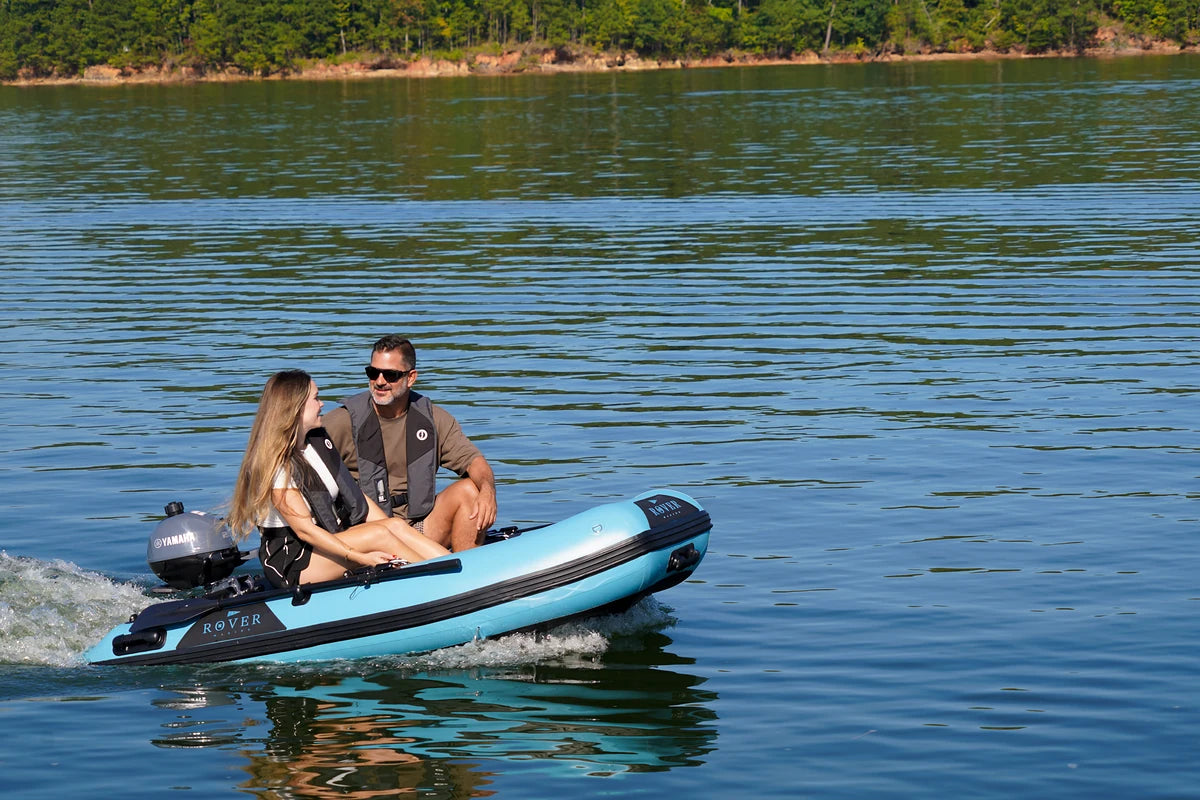
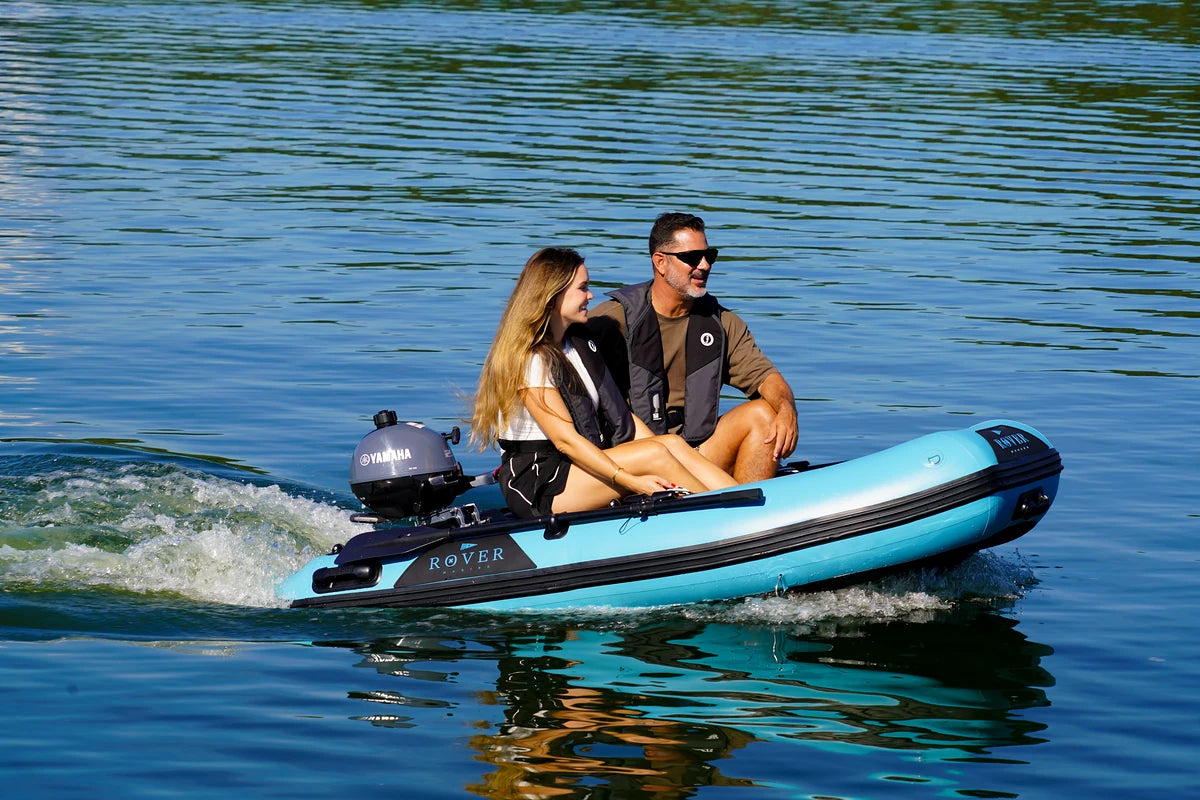
The 2.5 HP Yamaha is the lightest motor in Yamaha's portable lineup, and it sets up fast. Here it is paired with the 8 ft Battle Boat on a full lake cruise.

Battle Boat 8ft paired with Yamaha 2.5HP outboard motor, lake cruise

Keep the boat you love, or build something new

Three checks before you repower.

A horsepower match is only the beginning. Use your exact boat's capacity plate and installation instructions to confirm the complete setup.

Read the boat rating

Check the horsepower and motor-weight limits for your actual boat and model year. The rating for a 10-foot Rover does not apply to every Rover model.

Match the shaft

This model comes in 15-inch and 20-inch shaft lengths. Confirm your boat's transom calls for the shaft length you select before ordering, and do not upsize the shaft to chase a feature.

Plan the complete rig

Confirm mounting, steering clearance, propeller, and fuel system. Include passengers, motor, fuel, and gear in the boat's load calculation.

Not sure what to send? Start with your boat's make, model, year, and the specifications on its capacity plate. POP can help identify the questions to resolve before you order.

Family-run. California roots. Since 2012.

Yamaha builds the motor. Rover builds the boat.

POP Board Co started with paddle boards and grew around the days people wanted to spend outside. Today the lineup also includes inflatable docks, chairs, Rover Marine boats, and motors.

Here is what owners say about the Rover boats above.

“Really nice, well made products that we enjoyed all throughout the summer and fall with family and friends.”

Peyton W.
12 ft Battle Cat owner. Review via Canadian Board Co.

“The craftsmanship and design are top-notch, this boat truly stands out from anything else on the water.”

Rover Marine Battle Boat owner
Owner review featured on the official Rover Marine Battle Boat page. No reviewer name is shown on the source page.

These are boat-owner reviews of Rover Marine boats, not Yamaha motor reviews.

Before the first launch

The right information belongs on board too.

Use the documentation for your exact engine, and review the order details before installation.

Owner's manual

Use the engine's Primary ID from its serial label or warranty card to find the correct Yamaha manual for mounting, break-in, operation, and maintenance.

Open Yamaha's manual lookup

Shipping and returns

Motor delivery depends on the order and destination. Review return eligibility before installing or using the engine, and obtain authorization before any return shipment.

Shipping and delivery
Returns and refunds

Motor warranty

Yamaha motor coverage is separate from POP board and dock coverage. Confirm the terms, registration, region, and intended use that apply to your purchase.

Yamaha owner resources
POP warranty support

Yamaha 2.5 HP questions

Before you make it your motor.

Can I pair the Yamaha 2.5 HP with a Rover boat?

The 8' Battle Boat and 8' Battle Cat both list a 6 HP maximum and a 15-inch transom, which puts the 2.5 HP below the ceiling. The 10' Battle Boat and 10' Battle Cat both list a 10 HP maximum and a 15-inch transom, which puts the 2.5 HP below the ceiling. The 12' Battle Boat and 12' Battle Cat list a 20 HP maximum with the same 15-inch transom, so the 2.5 sits further below. None of these is an automatic fit approval: check your exact boat, motor weight, mounting, and total load.

Is 2.5 HP enough for an 8-foot Rover?

The 8-footers list up to 6 HP, so the 2.5 sits within the rating and suits easy displacement speeds, tender runs, and one or two people with light gear. It will not push a loaded 8-footer onto plane the way the 6 HP ceiling match would. If your normal use is a light crew and short hops, the 2.5 keeps things simple; for quicker planing with a load, more power helps.

Is 2.5 HP enough for a 12-foot Rover?

Two and a half horsepower will move a 12-footer at easy displacement speeds with a very light crew, but it is modest power for a boat rated up to 20 HP. With four adults and gear aboard, do not expect quick planing. If your normal load is one or two people with light gear on flat water, the 2.5 keeps the setup light and simple. For full crews or longer runs, more power gives more margin.

Is 2.5 HP enough for the 10-foot models?

The 10-footers list up to 10 HP, so the 2.5 is a natural match for tenders, harbor runs, and one or two people with light gear. A full four-person crew with gear will feel leisurely rather than quick. Match the choice to your normal load and talk it through with POP before you commit.

Can one person carry the F2.5?

At 37 pounds dry with built-in front and rear carry handles, one adult can carry the F2.5 short distances, such as down a dock or from a vehicle to the transom. Resting pads allow on-side storage without cowling scuffs.

Does it have a built-in fuel tank?

Yes. The F2.5 carries an integral 0.9 L fuel tank for short runs. Carry extra fuel separately for longer days.

What speed should I expect with 2.5 HP?

Speed and planing performance depend on the hull, load, propeller, installation, and conditions. There is no single speed promise for every boat-and-motor combination. Describe your normal crew and use when discussing a setup with POP.

Motor today. More possibilities tomorrow.

Keep the boat you love. Or meet your next Rover.

Choose the engine for your current hull, or compare a new boat and motor together. POP can help you work through the product questions before you commit.